

Milk thistle (Silybum marianum) has been known for centuries as a plant with hepatoprotective effects. Its seed extract—silymarin—contains multiple bioactive molecules (flavonolignans), yet nearly all research attention to date has focused on one of them: silybin. However, a team of scientists from the Centre of Excellence for Advanced Materials Application (CEMEA) SAS, v. v. i., in a recent perspective article, demonstrated that other, less abundant flavonolignans may exhibit even more promising therapeutic potential.
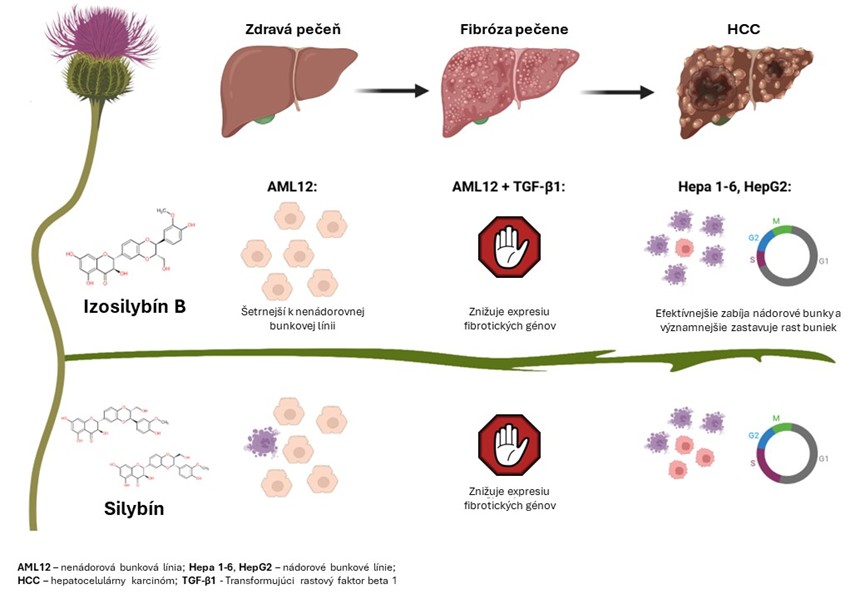
Our colleagues Michal Šelc, PhD (CEMEA), Andrea Bábelová, PhD (CEMEA), Radka Macová (Biomedical Center SAS) and Kristína Jakič, PhD (Biomedical Center SAS) therefore compared the effects of silymarin, silybin, and the lesser-known isosilybin B. The result is a new scientific article showing that, under in vitro conditions, isosilybin B exhibits the highest selectivity toward hepatocellular carcinoma cells while exerting the most sparing effects on healthy hepatocytes. At the same time, in a 2024 review article, they summarized all previous administration routes of silybin in animal models, including nanoformulations. The most pronounced therapeutic effect is repeatedly achieved with intravenously administered nanoformulations. CEMEA SAS is building on these findings in current projects, where nanoparticles conjugated with flavonolignans are being tested in mice. The aim is precisely targeted biological therapy that combines natural molecules with advanced materials. The institute is thus advancing toward precise, targeted biological therapy that integrates natural molecules with modern materials.
You can find more information in the publication of the authors mentioned above Isosilybin B: a potential novel therapeutic agent with hepatoprotective, anticancer and antifibrotic properties.